No Longer Human
Scott Bot Book Report
I just realized I have only been writing these emails when I’m miles from home. I also only write once a month, vs once a day in 2024. Much less 4:20 I suppose :)
I’m in Japan this week with my two oldest daughters shopping and getting ready to climb Mt. Fuji.
My last post was about Time, and I had a moment in the onsen at our hotel that did something to me this morning. I was in the sauna, and it’s hard to stay in for more than 10 minutes. They have a sand-and-glass timer, and if you look at it, time seems to stand still. If you don’t look at it and just get lost in thought, you can survive the heat longer…in my experience.
Today I sat on the lower seats and played a mind game where I wouldn’t look until I was positive 10 minutes had gone by. I let my mind wander to corners that needed exploring, and I decided that today I would write this. That brainstorming made both the heat and time bearable. When I finally looked up, 11 minutes had passed, and I got my bare, hot ass out of that sauna. The take away? Don’t watch time. Do something you love and you won’t notice it. If you have a job that you look at the clock, figure out a mind hack that makes it so you don’t have to do that anymore.
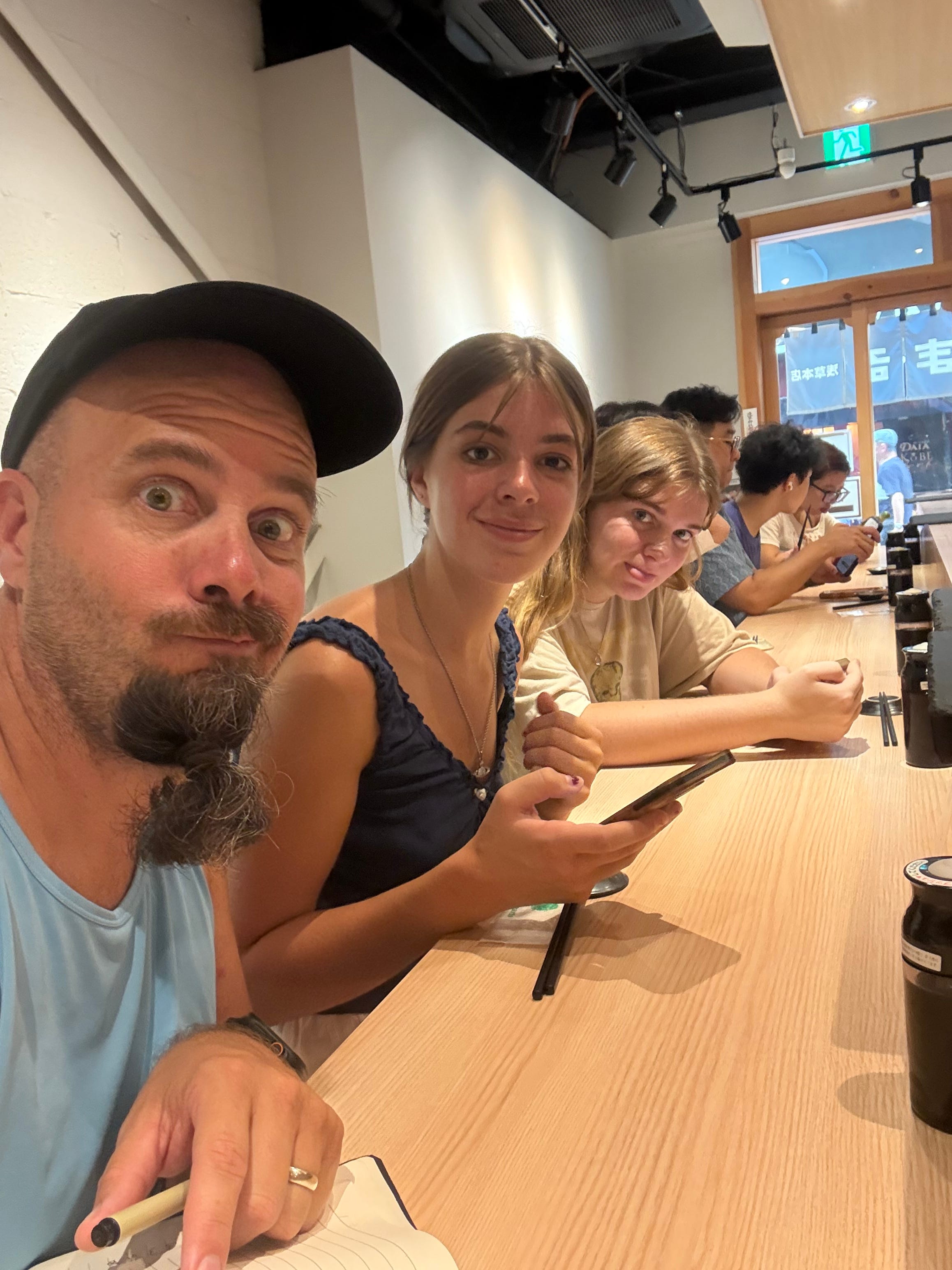
I got back to the room, and my daughter and I left for a day of shopping in Tokyo. We started with 7-Eleven, which is how most people get food in this country. An egg salad sandwich and a drink get me to lunch. Lunch was sushi near Asakusa
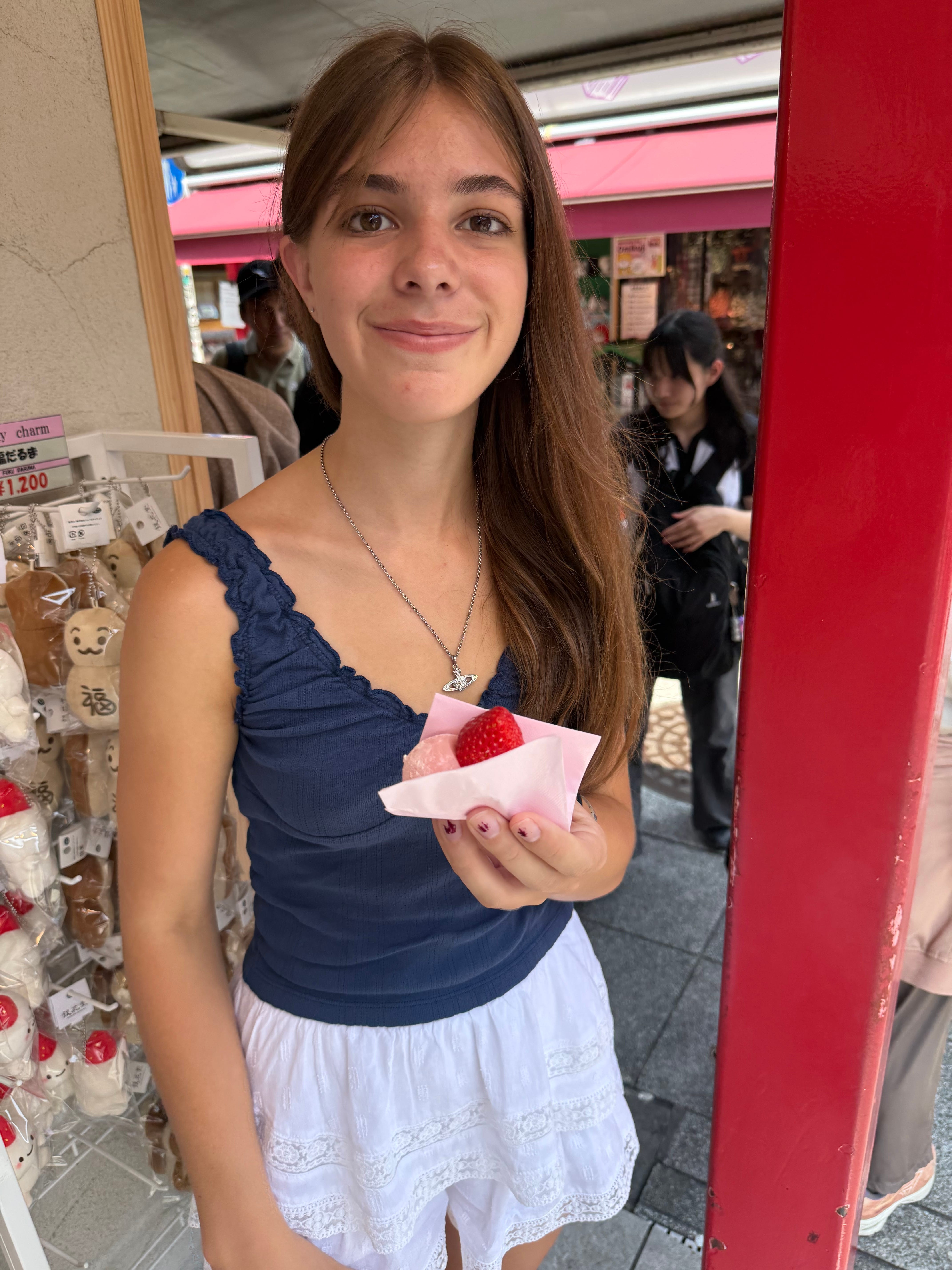
.
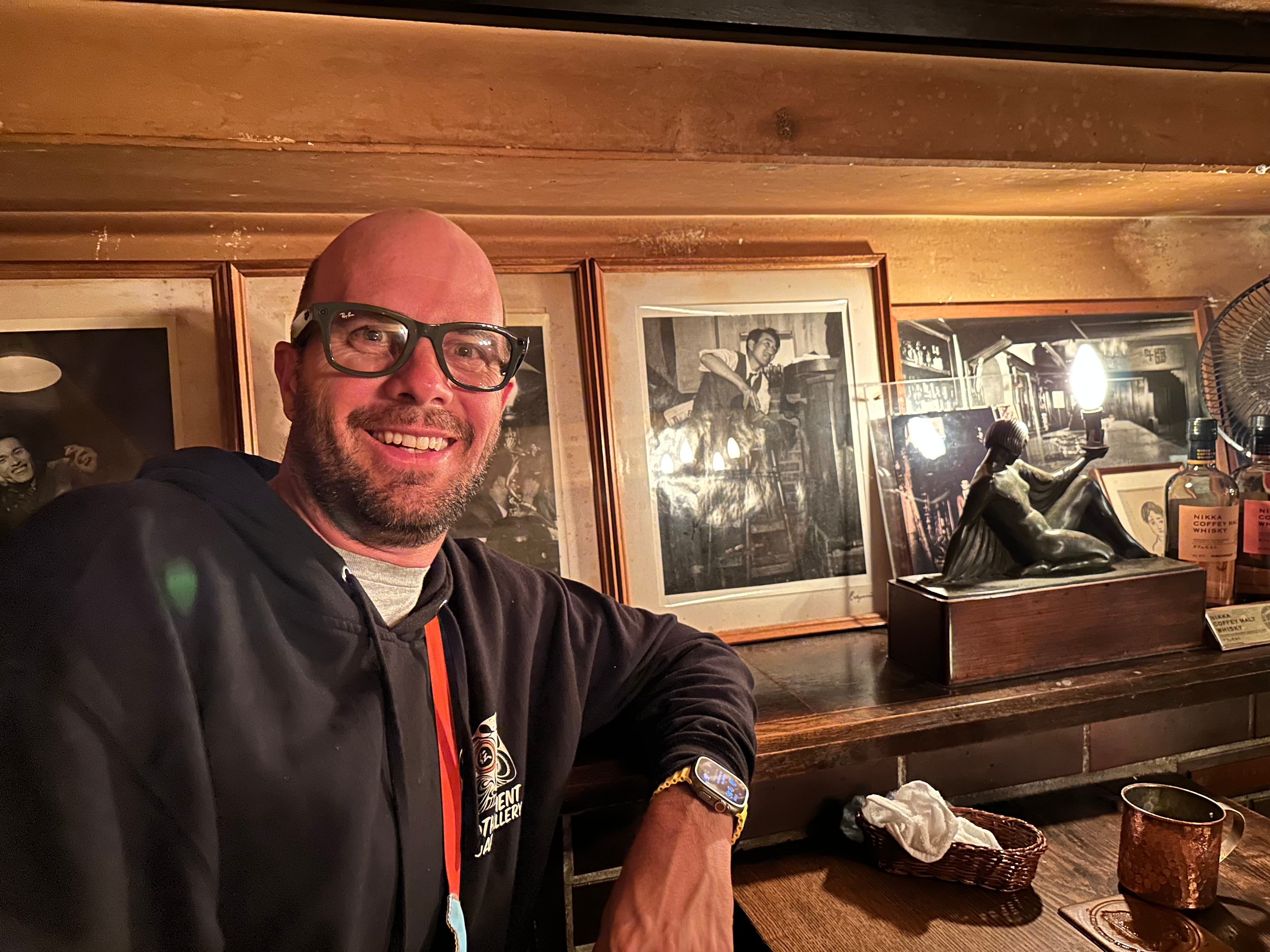
Last night we went to the famous Bar Lupin, where one of Japan’s most famous authors sat many times, drinking with other postwar writers before taking his own life at 38. My daughter is an anime content creator and has learned about many famous authors from a series called Bungo Stray Dogs. Dazai is one of the main characters in this manga/anime and here I am 3 years ago sitting in his favorite seat in real life and in the show. Here is a link to her TikTok 3 years ago she posted.
It dawned on me today that Jane has inspired much of my reading and watching over the last five years. She has good taste, and they aren’t stories I would have found on my own. She also gave me books on Buddhism to read after my head injury and that was key in my healing.
So here is today’s book report, something I did a lot in this email last year but haven’t done for a while.
No Longer Human by Osamu Dazai
Imagine Japan in 1948.
The country has just lost World War II. Hiroshima and Nagasaki have been destroyed. The emperor has announced he is no longer divine. Millions of people have lost everything they believed made life meaningful.
Into that broken country comes a small novel that quietly whispers:
“I have never understood human beings.”
Its author, Osamu Dazai, knew exactly what he was writing about.
Dazai spent his life battling severe depression, alcoholism, morphine addiction, repeated suicide attempts, and crushing feelings of inadequacy. He was born into a wealthy political family but never felt like he belonged anywhere. He viewed society as a giant performance where everyone else somehow knew the script.
Just weeks after completing No Longer Human, Dazai died by suicide with the woman he loved. He was only 38.
Many readers consider this novel his autobiography disguised as fiction.
Today it has sold over 10 million copies, has been translated into dozens of languages, is required reading in many Japanese schools and universities, and continues to resonate with readers who have ever felt like outsiders.
Deep Summary
The novel is presented as a series of notebooks written by a man named Ōba Yōzō.
Before the notebooks begin, an unnamed narrator discovers three strange photographs of Yōzō.
The first shows an awkward little boy.
The second a smiling young man whose smile somehow feels fake.
The third is disturbing.
The narrator can’t even decide whether the face belongs to a human being anymore.
That is the entire story in miniature.
Childhood: Learning to Wear Masks
Yōzō grows up wealthy.
His family is respected.
Everyone assumes he’s lucky.
Inside, he’s terrified.
He cannot understand people.
He doesn’t know why they laugh.
He doesn’t understand why they become angry.
He cannot predict social rules.
Every conversation feels like walking through a minefield.
Instead of trying to fit in naturally, he invents another strategy.
He becomes funny.
He acts like a clown.
He tells jokes.
He embarrasses himself on purpose.
People laugh.
They think he’s charming.
Nobody realizes he’s performing every second of his life.
This becomes the central metaphor of the book:
Most people wear masks occasionally.
Yōzō never takes his off.
He becomes trapped inside the performance.
Terror of Human Beings
One of the strangest ideas in the novel is that Yōzō isn’t afraid of monsters.
He’s afraid of ordinary people.
Normal conversations.
Dinner parties.
Neighbors.
Teachers.
Friends.
Every social interaction feels impossible.
Rather than feeling superior to society, he feels fundamentally defective.
He concludes:
“I’m not one of them.”
This is where the title comes from.
He slowly decides he isn’t really human at all.
University and Self-Destruction
When Yōzō leaves home, everything gets worse.
He discovers alcohol.
Then bars.
Then artists.
Then radicals.
Then drugs.
He isn’t seeking pleasure.
He’s seeking relief.
Anything that briefly quiets the anxiety becomes irresistible.
Instead of building a life, he drifts.
People support him.
Women rescue him.
Friends forgive him.
Yet every opportunity collapses because he cannot believe he deserves happiness.
This is remarkably modern psychology.
He sabotages every relationship before it has the chance to disappoint him.
Women
Women become both refuge and tragedy.
Several women genuinely care about Yōzō.
He often seems gentler around them than around anyone else.
But because he believes himself fundamentally broken, he cannot accept love.
Love becomes another performance.
Another lie.
Another thing he eventually destroys.
One of the darkest sections involves a joint suicide attempt.
Yōzō survives.
The woman doesn’t.
Instead of changing him, the experience deepens his belief that he contaminates everyone around him.
Losing Himself
As the novel continues, Yōzō’s identity dissolves.
He drinks constantly.
He becomes addicted to morphine.
He isolates himself.
Reality itself becomes unstable.
The frightening part isn’t dramatic insanity.
It’s gradual erosion.
Each compromise seems understandable.
Each decision seems temporary.
Until suddenly there’s almost nothing left.
“No Longer Human”
Near the end, Yōzō stops believing recovery is even possible.
He no longer thinks,
“I’m a broken person.”
He thinks,
“I’m not a person.”
That distinction matters.
If you’re broken, you might someday heal.
If you’re not human…
there is no hope.
The novel ends not with a dramatic climax but with resignation.
Life simply empties out.
What Makes This Book So Powerful?
Unlike many novels about depression, Dazai never asks for sympathy.
He doesn’t romanticize suffering.
He doesn’t offer easy answers.
Instead, he records the inner logic of despair with terrifying honesty.
People who’ve never experienced depression may find the narrator irrational.
People who have often describe the book as uncomfortably accurate.
Themes
Everyone wears masks.
Most people simply don’t realize how many.
Shame can become an identity.
The worst damage isn’t making mistakes.
It’s believing you are the mistake.
Loneliness can exist even when surrounded by people.
Yōzō rarely lacks company.
He lacks connection.
Performance can become prison.
If everyone loves the version of you that’s acting…
who would love the real you?
Mental illness changes perception.
The book constantly reminds us that reality and emotional reality aren’t always the same thing.
Yōzō believes things about himself that the people around him often do not.
Why Japan Loves This Book
Unlike many Western novels about overcoming adversity, No Longer Human refuses redemption.
It isn’t about triumph.
It’s about radical honesty.
Japanese literature often embraces imperfection, melancholy, and impermanence rather than insisting every story end happily.
That emotional realism is one reason the novel has endured for nearly 80 years.
Purchase & Audiobook
Amazon: Search for No Longer Human by Osamu Dazai (the Donald Keene translation is a classic; newer translations are also available).
Audible: An unabridged English audiobook is available on Audible.
Sales & Reach
Estimated copies sold: Over 10 million
Languages: 30+ translations
First published: 1948
Status: One of Japan’s best-selling novels of all time
Influence: Adapted into films, manga, anime, stage productions, and inspired countless writers.
Ratings
Goodreads: ~4.1/5
Amazon: ~4.6/5
Scott Bot’s Take
This isn’t really a book about depression.
It’s a book about identity.
Yōzō believes everyone else received an instruction manual for being human, and somehow he missed the class. Instead of asking for help, he studies everyone else and becomes an incredible actor. The tragedy is that the better he gets at performing, the less anyone notices that he’s suffering.
That idea extends far beyond mental illness. Think about social media, professional success, or even family life. It’s possible to become so good at playing a role that the role replaces the person.
I don’t think Dazai is saying humans are hopeless. I think he’s showing what happens when shame goes unchallenged. Every setback becomes “proof” that Yōzō’s worst beliefs about himself are true. Once that loop closes, every failure reinforces the identity, and the identity creates more failure.
The book also highlights something we often miss: loneliness isn’t just the absence of people. It’s the absence of being known. Yōzō is almost never alone, yet almost no one knows him because he never lets them meet the person behind the mask.
Reading this in today’s world feels surprisingly current. We’ve become experts at curating versions of ourselves that look successful, funny, productive, or happy. Dazai asks a haunting question: if everyone loves your performance, who loves you?
It’s a dark novel, but I don’t think it’s nihilistic. I think it’s a warning. The earlier we let someone see the real us—the confused, scared, imperfect version—the less likely we are to become trapped behind a mask that eventually feels impossible to remove.
If you only remember one thing from
No Longer Human:
The most dangerous mask isn’t the one that fools other people—it’s the one that eventually convinces you that the real you no longer exists.
Thanks for reading my book report and other words today. I love you and always have. See you next month from Utah most likely this time.
GSP2